
A custom silicone hose manufacturing process starts with the application details: route shape, end dimensions, media, temperature range, pressure condition, reinforcement target, marking needs, and expected quantity. Once those points are clear, the production team can decide whether the project should be reviewed as a straight connector, reducer, formed hose, hand-wrapped silicone hose, or a more complex branched part.
For a simple straight connector, the path may be short. For shaped coolant hoses, charge-air hoses, heater hoses, and custom routing parts, the workflow usually moves through input review, incoming material inspection, material preparation, cutting, hand wrapping, curing, demoulding, trimming, in-process inspection, marking, final inspection, testing when required, packing, and outgoing control.
Why the process starts with application review
The same material name can hide very different constructions. A blue silicone elbow and a black reinforced CAC hose can both be silicone hoses, yet their reinforcement, wall thickness, clamp area, liner direction, and route control can be different. The manufacturing review connects the application to the build method, instead of forcing every project through the same process.
The first review should confirm the details that affect the hose shape and construction:
- Hose ID, OD, wall thickness, and connection points
- Centerline route, bend radius, leg length, and end orientation
- Working media, continuous temperature, and peak temperature
- Working pressure, pulse condition, vacuum, or burst target
- Reinforcement requirement and expected hose stiffness
- Color, surface finish, logo, printed marking, or traceability need
- Prototype quantity, production quantity, and repeat-order expectation
Step 1: Input review and incoming material control
The process normally starts with one of three inputs: a drawing, a physical sample, or a marked installation photo. A drawing is useful when it includes dimensions, tolerances, wall thickness, material notes, and end orientation. A physical sample is useful when an existing route shape or failed part needs to be reviewed against a new build direction. A photo is useful for early discussion, but it rarely shows enough information for final quotation.
Before production starts, the same discipline should apply to materials and supporting items. Silicone compound, reinforcement fabric, packing materials, tooling, and checking jigs should be checked against specification, model, quantity, appearance, and available material documentation. This is the practical starting point for traceability.
Step 2: Material preparation before wrapping
Most custom silicone hose projects use VMQ silicone as the base material direction, but that does not mean every silicone hose has the same construction. Reinforcement, ply count, liner direction, hardness, and wall build depend on the application.
In a hand-wrapped hose process, material preparation can include material request, mixing or milling, calendering the silicone sheet, preparing reinforcement fabric, and cutting material to the required width, length, and thickness. The control focus is practical: color, uniformity, vulcanization condition, sheet thickness, fabric width, surface cleanliness, bubbles, holes, and visible defects.
Silicone is also not a universal oil or fuel hose material. If the hose will contact oil, fuel, aggressive chemicals, or special coolant, the media must be named before the material direction is confirmed.
Step 3: Cutting and hand wrapping
Shaped silicone hoses are usually built around a shape reference. In industry wording, the product may be called a formed silicone hose, while the manufacturing method is often described as hand-wrapped silicone hose production. The goal is to control the hose route, bend shape, end alignment, layer build, and repeatability.
Cut pieces and reinforcement are built onto the shape reference according to the construction direction. At this stage, the important checks are layer position, overlap, color, surface condition, bubbles, holes, and whether the end orientation still matches the intended route.
This is where sample condition matters. If an old sample is stretched, cracked, cut, or already deformed from service, it may not represent the intended installed route. A marked sample is more useful when it shows the correct centerline, end orientation, and any areas that should not be copied exactly.
Step 4: Curing, demoulding, trimming, and finish control
After wrapping, the hose moves through curing and cooling before it is released from the shape reference. The process control focus is temperature, time, release condition, and whether the hose keeps the required shape after demoulding.
Trimming and end cutting then bring the part closer to its finished dimensions. For complex parts, end alignment and clamp-seat geometry matter as much as the visible bend. A hose that looks acceptable on a table may twist, rub, collapse, or pull away from a clamp seat once installed.
Step 5: In-process inspection, marking, and print check
MQC or in-process inspection verifies dimensions and appearance before final marking and packing. For custom hose programs, the important controls are usually length, wall thickness, inside diameter, bore cleanliness, surface condition, and visible construction consistency.
Marking can include laser coding, print, logo, batch reference, or traceability information. The marking check should confirm position, size, clarity, and layout. Public-facing images should not expose customer model numbers or confidential part references.
Step 6: Final inspection, testing, packing, and outgoing control
Final inspection should connect the approved drawing or sample to the finished production part. The control focus is dimensions, bore, surface, marking, testing where required, packing method, label, and outgoing condition.
Leakage or burst testing may be required depending on the application, drawing, or project stage. Packing and outgoing inspection then close the production loop. For repeat orders, the project record should keep drawing revision, sample approval, material direction, marking layout, packaging notes, test records, and controlled details that affect future production. That is what prevents a second order from becoming a new development project.
Process map
Hand-Wrapped Silicone Hose Production Flow
Main production and control steps. Actual controls depend on drawing, material, and project requirement.
Process step
Input and application review
drawing, sample, media, quantity, route condition
What is controlled
ID / OD, wall, bend, pressure, temperature, fit
Record / output
review notes, drawing, or sample reference
Process step
Incoming material inspection
silicone, reinforcement, packing materials, tooling / jig
What is controlled
specification, model, quantity, appearance, available material documents
Record / output
incoming inspection and material-lot reference
Process step
Material preparation
request material, mixing / milling, calendering
What is controlled
color, uniformity, vulcanization, thickness, width
Record / output
material transfer and preparation record
Process step
Cutting and hand wrapping
cut material, build layers, hand wrap on shape reference
What is controlled
length, width, layer, color, bubbles, holes, overlap
Record / output
work instruction, operator record
Process step
Curing, demoulding, and trimming
cure, demould, cut ends, clean and finish
What is controlled
temperature, time, shape release, cut dimension
Record / output
curing / trimming record
Process step
In-process inspection
MQC check before final marking and packing
What is controlled
length, wall thickness, inside diameter, appearance
Record / output
MQC inspection record
Process step
Marking and print inspection
laser coding, print, logo, traceability mark
What is controlled
marking position, size, clarity, customer-safe code
Record / output
marking layout and print check
Process step
Final inspection, testing, packing, and outgoing control
FQC, leakage / burst testing when required, packing, storage, outgoing check
What is controlled
dimensions, bore, surface, marking, testing, label, packaging
Record / output
FQC / test / packing / OQC records
Repeat-order control depends on approved sample, drawing revision, material direction, marking layout, packaging notes, and production records.
Process evidence is useful only when its limits are stated
Factory images can confirm that a real operation exists, but they do not replace a drawing, inspection result, material document, or approved sample. Each example below separates what is visible from what still requires project-specific evidence.
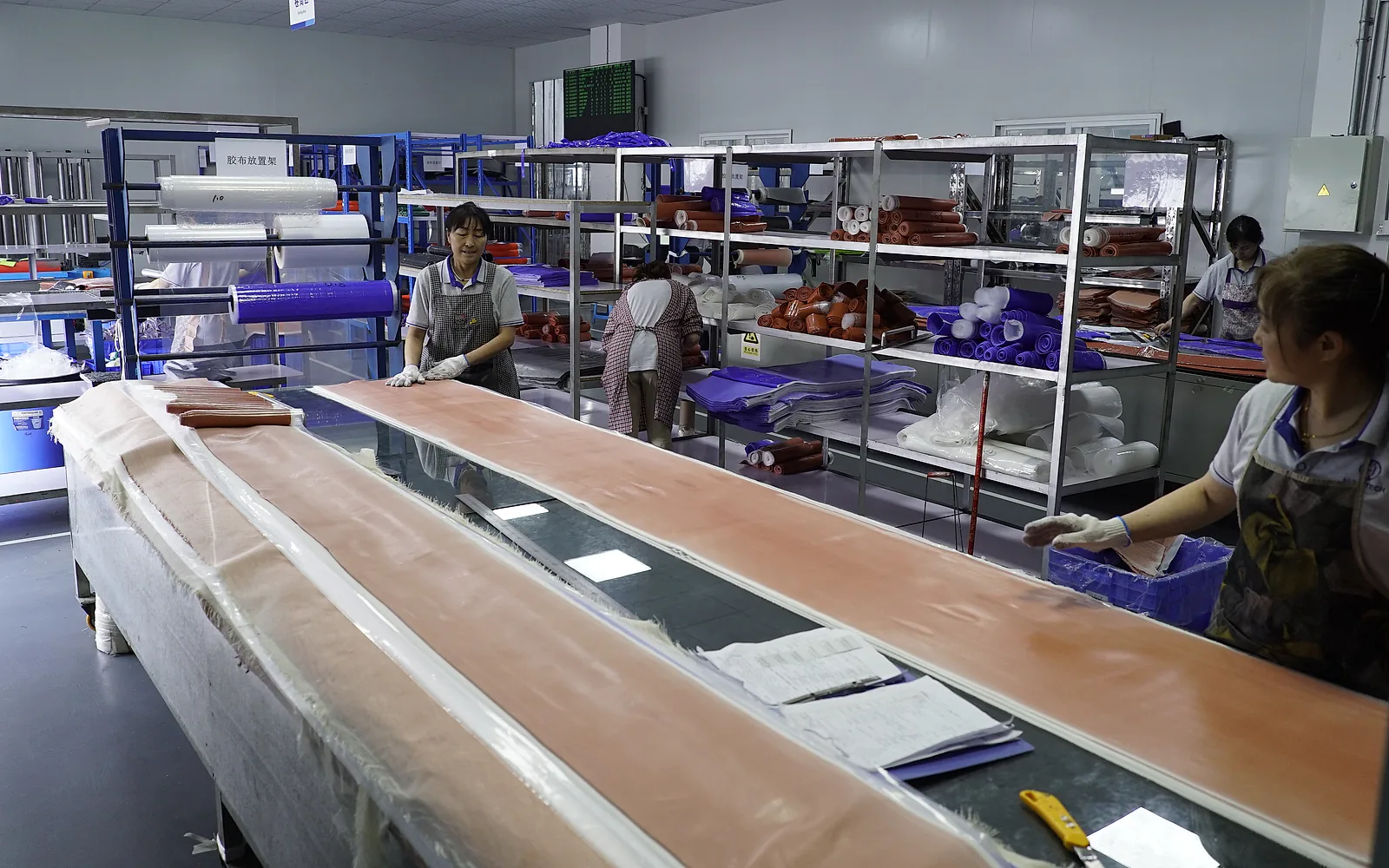
Material preparation evidence
Reinforcement and sheet preparation before wrapping
What the image shows
A dedicated cutting and material-staging area with prepared sheet and reinforcement rolls before the hose is built on its shape reference.
What it does not prove
It does not confirm the compound, ply count, batch identity, or approved construction for a specific customer part.
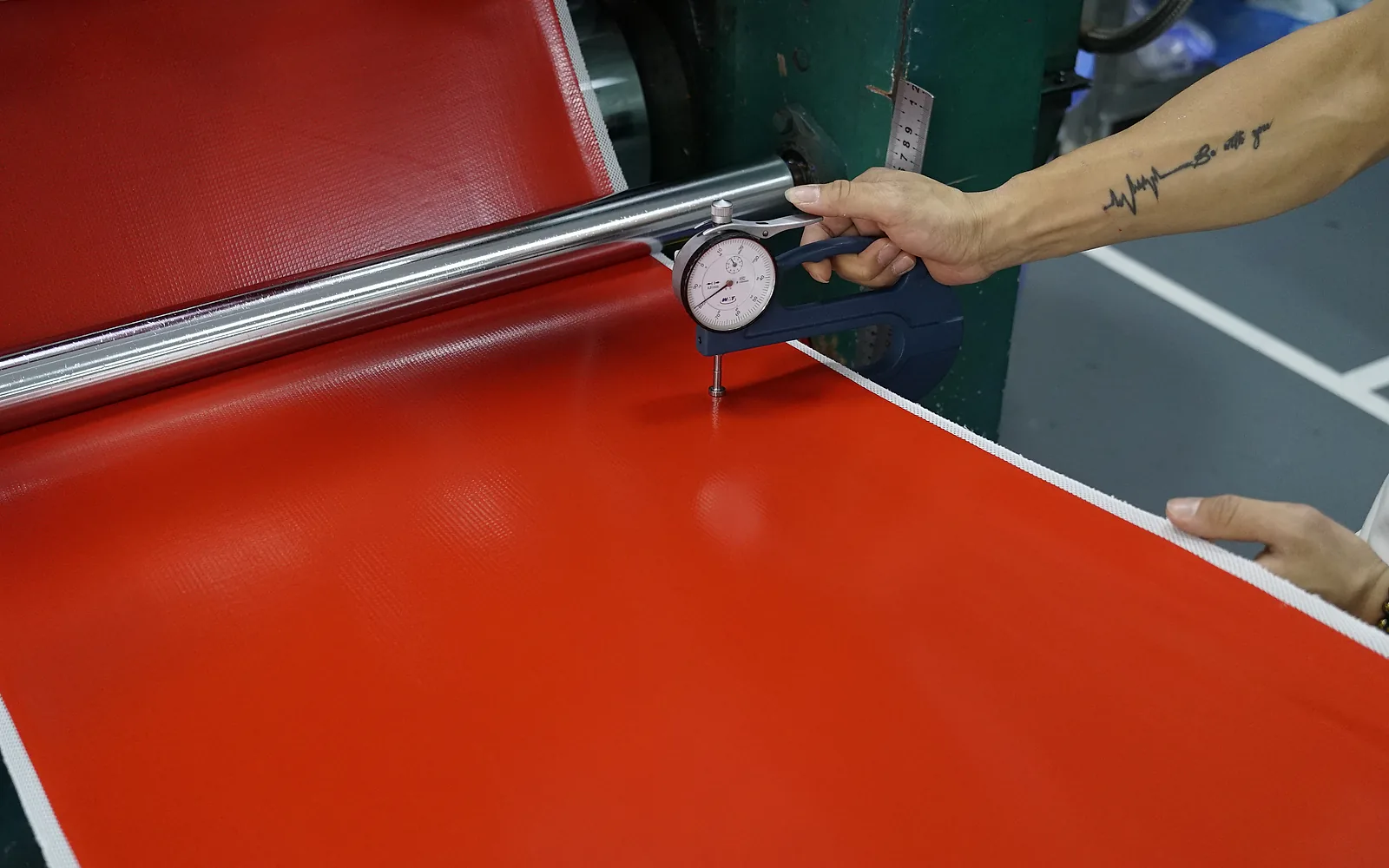
In-process control evidence
Thickness is checked before the material becomes a hose
What the image shows
A dial thickness gauge being used on prepared reinforced sheet, illustrating an in-process control point before wrapping.
What it does not prove
The photo does not prove the acceptance range, calibration status, finished-hose wall thickness, or conformance to a buyer drawing.
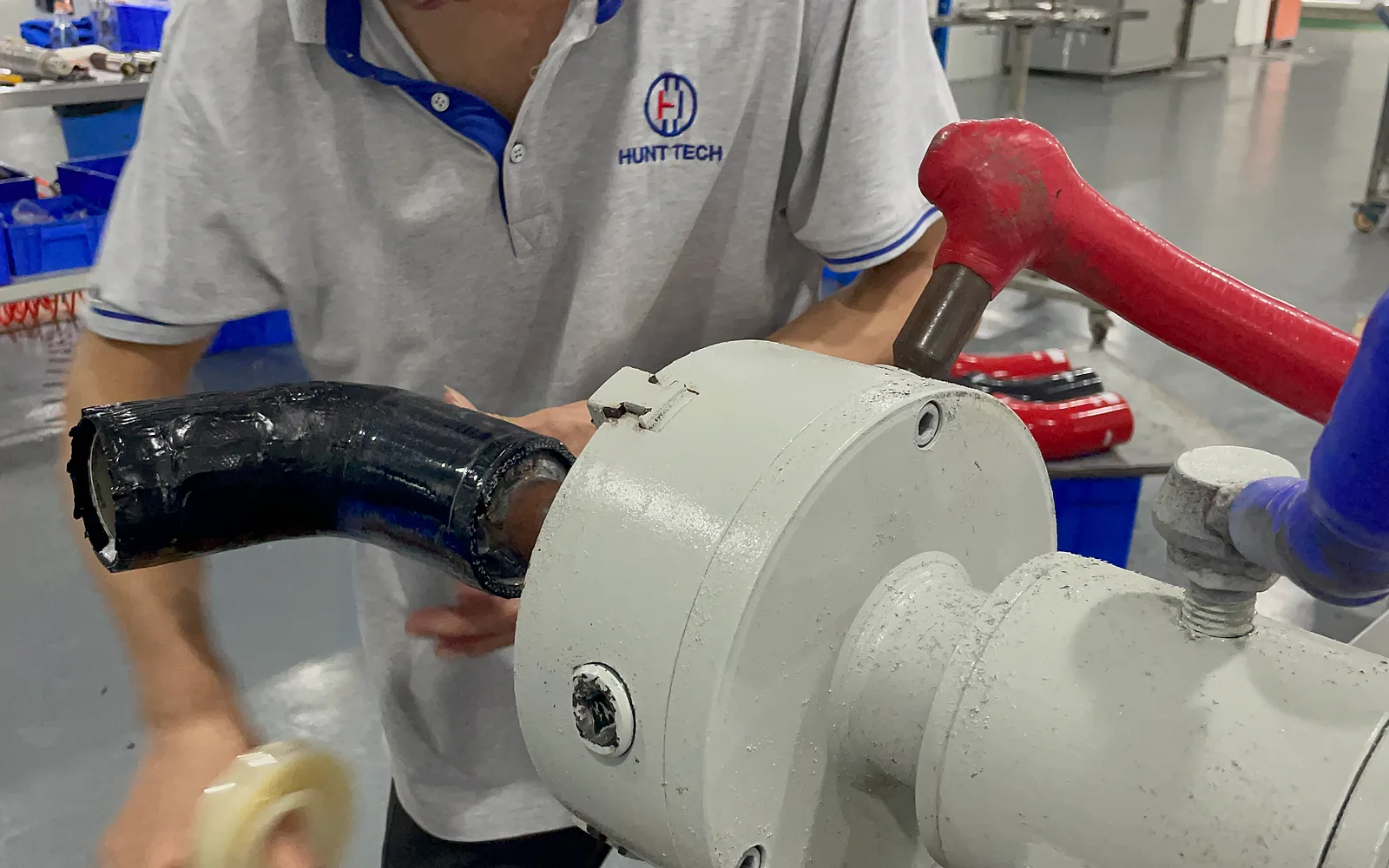
Forming evidence
The route is held by a physical shape reference
What the image shows
A wrapped formed-hose workpiece being handled on its shape reference, where bend path and end orientation are established before release.
What it does not prove
It does not establish that the released part has passed dimensional approval, fitment review, or any pressure test required by a specific project.
RFQ inputs that help confirm the route
For a custom silicone hose RFQ, the most useful information is the data that affects shape, material, and construction:
- Drawing, 3D file, physical sample, or marked route photo
- Hose ID, OD, wall thickness, and connection dimensions
- Centerline length, bend radius, leg length, and end orientation
- Media name and concentration if coolant or special fluid is used
- Continuous and peak temperature
- Working pressure, vacuum, pulse, and burst target if relevant
- Reinforcement requirement or existing ply count
- Color, logo, printed marking, and packaging needs
- Prototype quantity, production quantity, and repeat-order forecast
If some information is not available yet, say so clearly. The next step can still be defined, but pressure, material, or tooling direction should not be silently assumed.
Common mistakes that slow the process
The most common delay is asking for a quote from a photo with no dimensions. The second is sending an old sample without saying whether the deformed shape should be copied. A third is naming only the material, such as silicone hose, without media, pressure, temperature, or route information.
Other avoidable problems include missing clamp-seat dimensions, unclear end orientation, no target quantity, and no explanation of whether the order is prototype, repair, aftermarket, or repeat production.
Related pages
You do not need a finished specification before the first contact. Send a work email, what the hose connects, and any drawing, sample photo, or route reference already available; missing technical inputs can be identified during review.
Start a Silicone Hose Review