
Custom hose projects and development paths
Read a documented hose development case, then compare representative scenarios by application and starting point. Use the scenarios to identify the inputs and checks relevant to your own requirement.
Documented project
Custom silicone hose for a hydrogen fuel-cell system
Customer assembly data, a reinforced silicone hose, internal first-article results and a follow-up order. Customer identity and proprietary details are withheld.
Read the hydrogen fuel-cell system case- Dimensional review
- Approved
- Leakage check
- No leakage recorded
- Adhesion check
- Acceptance criterion met
Internal findings for the referenced first article.
Review topics for the scenarios below. The sequence depends on the project and its open questions.
Share Available Inputs
Start with a drawing, sample, photos or an application brief. Identify what still needs confirmation.
Review Duty and Route Together
Consider media, temperature, pressure or vacuum, material and installed space together.
Agree Prototype Checks
Define the checks, acceptance criteria and approval responsibilities for the project.
Define Repeat-Order Controls
Agree which drawing revisions, inspection points and production references need to be retained.
Representative development scenarios
These examples describe possible review paths, not completed-project case studies or reported test results. Compare the starting inputs and review checkpoints with your own requirement.
Buyer types are illustrative. Product images show relevant Hunthose product references, not proof of an individual scenario's outcome.
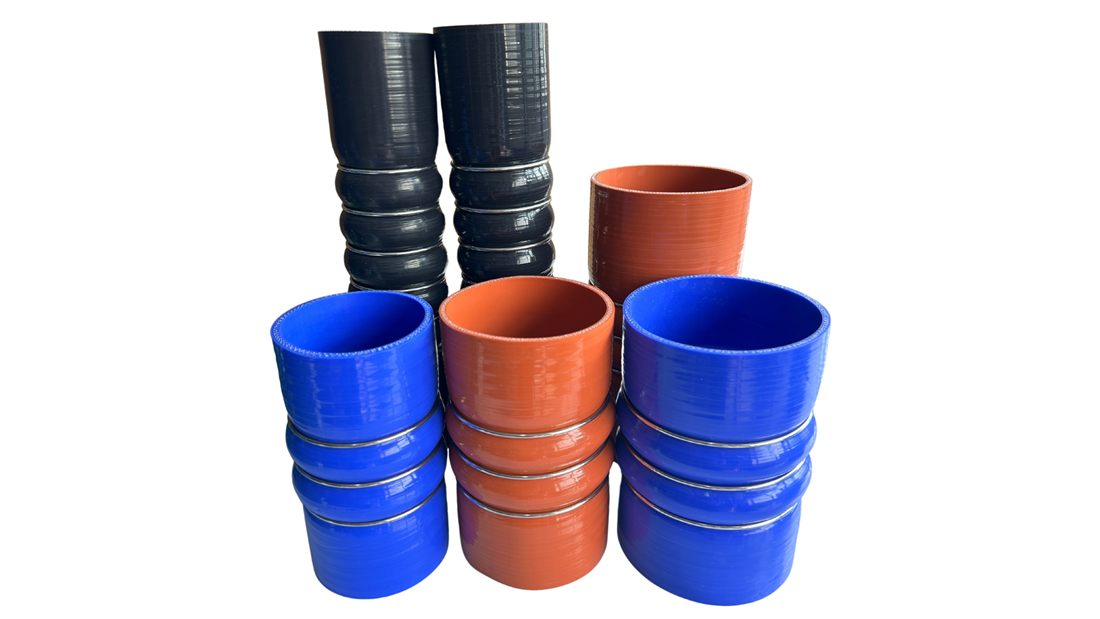
CAC hose: reinforcement and dimensional review
Review Approach
Review the drawing, temperature range, boost pressure and connection details together. Select reinforcement and compound candidates against those requirements rather than assuming a fixed ply count.
Review Checkpoints
Agree dimensional tolerances and pressure-test conditions, acceptance criteria and responsibility before prototype approval or production release.
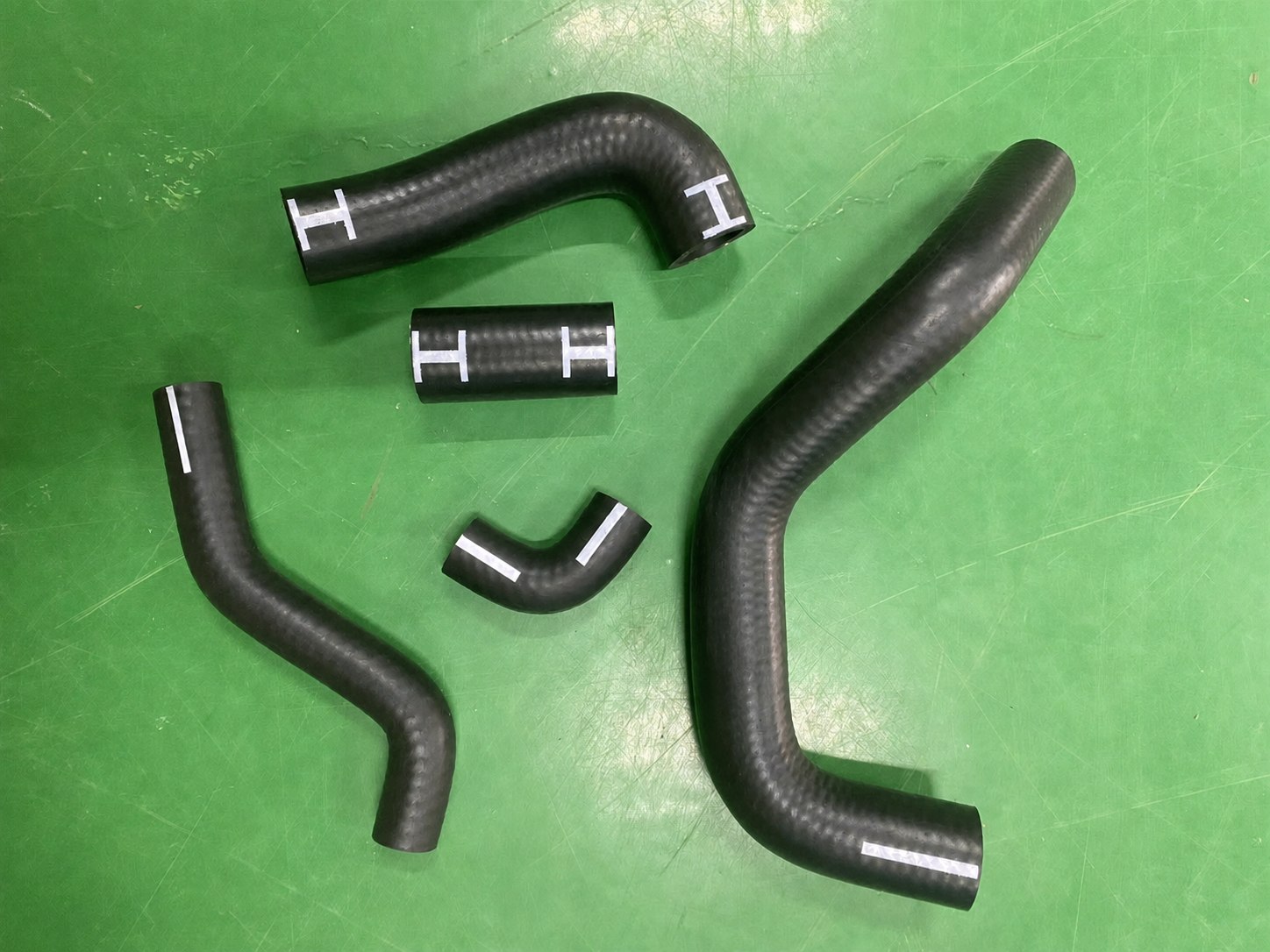
Turbo inlet: routing, flex sections and marking
Review Approach
Review the sample alongside installed-space photos, end connections and duty conditions. Assess corrugated sections, clamp zones and any requested brand mark before defining tooling requirements.
Review Checkpoints
Confirm the drawing revision, marking method and position, then agree prototype checks for fit and surface finish. A loose sample alone does not confirm the installed route or material grade.
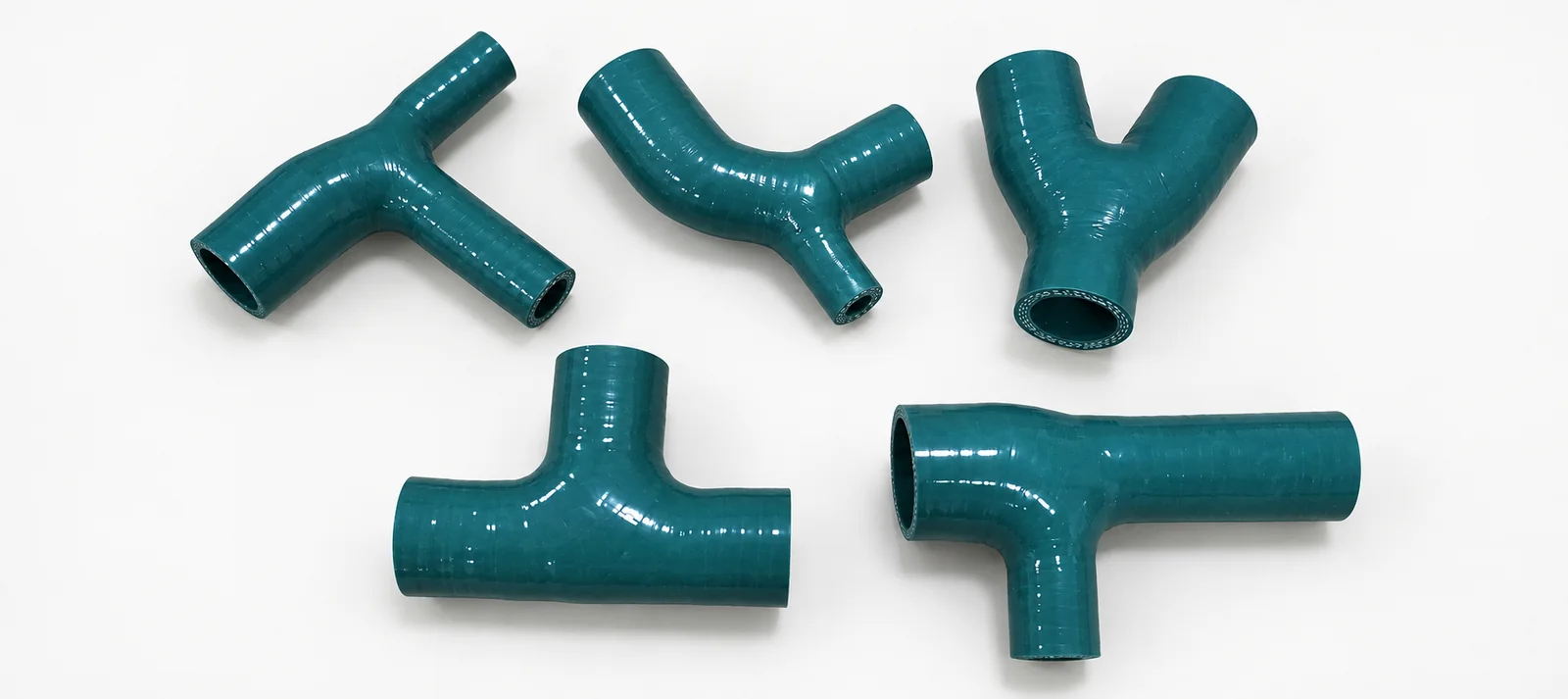
Branched coolant hose: junction and installed-space review
Review Approach
Review branch orientation, bore transitions and nearby components together with coolant composition and operating temperature. Assess material and construction options before settling the prototype design.
Review Checkpoints
Define how branch position, end orientation, clamp access and dimensions will be checked in the installed circuit. Agree the sample acceptance conditions before series production.
Fluid-transfer hose: compatibility before material selection
Review Approach
Identify the fluid, concentration, temperature range and pressure or vacuum duty. Review candidate compounds and reinforcement against the full conditions; EPDM is not a default choice for every fluid.
Review Checkpoints
Agree compatibility-test conditions, duration, acceptance criteria and who will perform the checks. Record the findings before treating a candidate compound as approved for the application.
Cooling and charge-air set: part-by-part approval
Review Approach
Review each part's drawing, media, duty and connection requirements. Decide which material, colour or marking requirements can be shared without assuming cooling and charge-air parts need the same construction.
Review Checkpoints
Agree per-part tolerances, sample checks and revision references, then define any combined installed-fit review. Keep individual part approval traceable within the set.
Share your starting point.
A drawing, sample or application brief helps us review the requirement. If technical details are missing, start with what you have so we can clarify the next checks.