
Rubber hose sourcing should start with the service environment: media, temperature, pressure, abrasion, ozone, movement, and route geometry. A rubber compound cannot be selected reliably from color or diameter alone.
Looking for available hose forms and compound directions? Start with our custom rubber hose manufacturing capabilities. This guide focuses on how to evaluate the supplier and agree the approval records.
How Hunthose reviews custom rubber hose projects
Hunthose supports formed, extruded, and molded rubber programs from drawings, samples, or application briefs. Typical projects include coolant hoses, air handling hoses, oil and fuel hoses, industrial fluid transfer, rubber profiles, and molded rubber parts used with hose programs.
Compound direction by service condition
| Compound direction | Often reviewed for | Caution |
|---|---|---|
| EPDM | Coolant, water-glycol, air, outdoor ozone | Not for oil or fuel contact |
| NBR / HNBR | Oil, fuel, grease, hydraulic fluid | Review heat, ozone, and long-term service target |
| FKM | High heat, fuels, oils, aggressive media | Higher cost; confirm whether service requires it |
| AEM / ACM / CR | Mixed engine-bay or weathering conditions | Selection depends on media, heat, and exposure |
Supplier evidence to request before approval
| Review area | Request from the supplier | Agree before release |
|---|---|---|
| Compound and construction | Named compound grade and reinforcement proposal against the actual media | Required compatibility and performance validation; who performs it |
| Tooling and geometry | Drawing revision, end orientation, clamp zones, and tooling reference | Ownership, change approval, and inspection dimensions |
| First-off sample | Dimensional and appearance review against the approved reference | Fitment sign-off and any functional tests still required |
| Repeat supply | Approved part reference, revision control, and batch inspection plan | How changes to compound, geometry, or process are communicated |
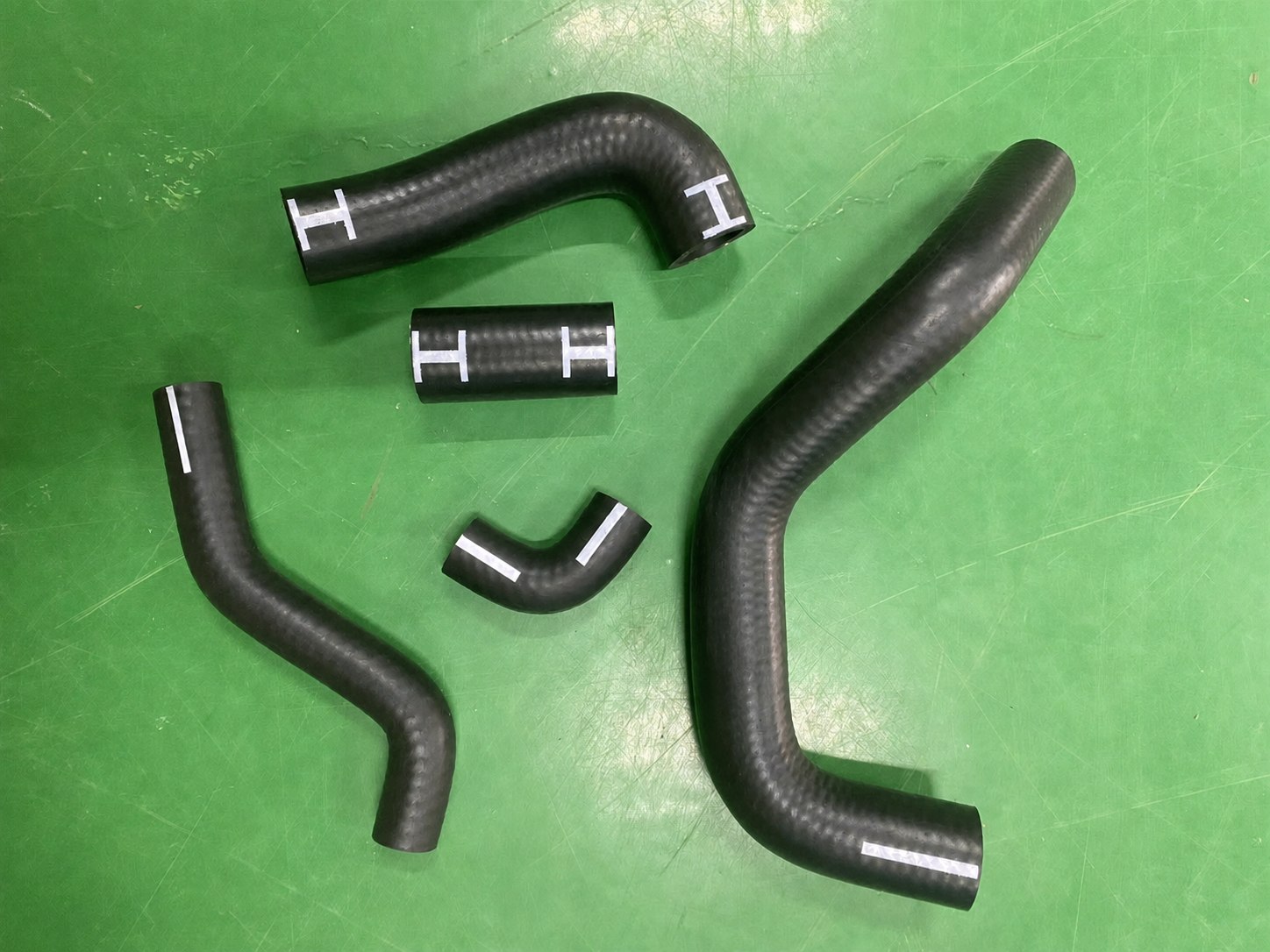
Product photographs can show geometry and finish. They cannot establish a material grade, pressure rating, chemical compatibility, or a customer's approval. Ask for project-specific evidence where it matters.
Project information for a supplier comparison
- Fluid media name, concentration, additives, and exposure duration.
- Continuous temperature, peak temperature, and surrounding heat source.
- Working pressure, vacuum condition, pressure pulse, and burst target if known.
- Hose ID, OD or wall thickness, bend radius, length, and end connection.
- Whether the hose is straight, formed, molded, assembled, or reinforced.
- Outdoor exposure, ozone, abrasion, dragging, or movement requirements.
- Prototype quantity, production quantity, and expected repeat demand.
What to avoid
- Requesting an industrial hose only by color or approximate diameter.
- Saying chemical resistant without naming the chemical and concentration.
- Leaving out pressure pulse, vacuum, abrasion, or outdoor exposure.
- Assuming one compound can handle coolant, oil, fuel, and chemical media.
- Using a damaged old sample without marking the intended installed shape.
Development path
- Review application conditions before material selection.
- Confirm drawing, sample, or route geometry.
- Choose compound and construction direction against media and pressure.
- Prepare tooling, mandrel, extrusion, or molding route where needed.
- Produce prototype or first-off sample for dimensional review.
- Record approved compound, dimensions, and construction for repeat supply.
Related pages
Send drawings, sample photos, media, temperature, pressure, route position, and expected volume when you are ready. Hunthose reviews the project path before quotation instead of treating every hose as a catalog part.