
EPDM is commonly used for water-glycol coolant, radiator, heater, and many low-pressure thermal management circuits. It should still be confirmed against coolant chemistry, temperature, pressure, route shape, and whether oil or fuel contact is possible.
Where EPDM coolant hoses are used
Custom EPDM coolant hoses are usually specified when the route cannot be solved by a standard straight hose, or when a supplier needs to reproduce an existing formed shape from a drawing or physical sample.
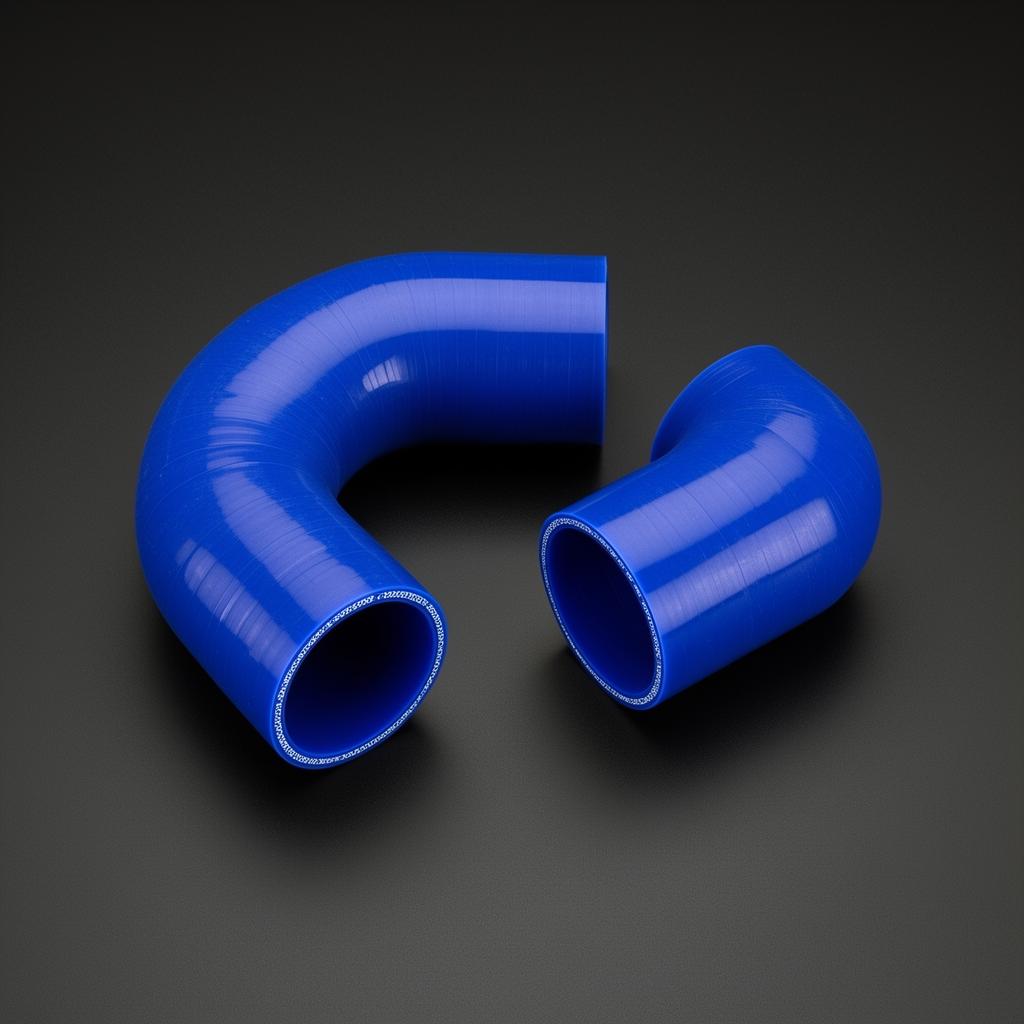
Coolant hose geometry and review points
| Geometry | Typical use | Buyer inputs |
|---|---|---|
| Straight radiator hose | Direct coolant connection | ID, length, wall, clamp seat, pressure |
| Formed elbow or multi-bend hose | Routing around fixed engine or equipment parts | Bend radius, leg length, orientation, sample photos |
| Y-junction or branched hose | Split or merge coolant flow | Branch angle, flow direction, connection diameters |
| Reducer hose | Different pipe diameters in one circuit | Both end IDs, transition length, clamp zones |
Information needed before quotation
- Drawing, physical sample, 3D file, or dimensional sketch.
- Coolant media: water, glycol mixture, specialty coolant, additives, and concentration if known.
- Continuous and peak temperature, working pressure, and pressure pulse condition.
- ID, wall thickness or OD, leg length, bend radius, branch angles, and end connection type.
- Whether the hose may contact oil, fuel, chemicals, abrasion, outdoor ozone, or high radiant heat.
- Prototype quantity, production quantity, packaging, marking, and repeat-order expectations.
Material cautions
EPDM is a strong starting point for many coolant applications, but it is not appropriate for fuel or oil service. If the hose sees oil mist, fuel splash, chemical media, or a mixed environment, the compound direction should be reviewed before EPDM is confirmed. Peroxide-cured EPDM may be considered for higher temperature coolant service, depending on the project target.
Development and quality path
- Confirm media, temperature, pressure, and route position.
- Review EPDM or alternative compound direction against the service conditions.
- Confirm geometry from drawing, sample, or measured reference.
- Prepare formed hose tooling or mandrel setup when needed.
- Produce prototype or first-off sample for fit and dimension review.
- Maintain approved geometry and material records for repeat orders.
Related pages
Send drawings, sample photos, media, temperature, pressure, route position, and expected volume when you are ready. Hunthose reviews the project path before quotation instead of treating every hose as a catalog part.